
Transforming Cold Chain Logistics for a Sustainable Future:
The time for incremental change is over; the era of disruptive synergy has begun.
Cooling Efficiency for Effective Control:
Cost Optimization and Sustainable Solutions in the Food and Pharmaceutical Sectors
by Dr. Serap OĞUZ TANATAR published November 25, 2025
The cold chain logistics sector is at a pivotal moment. While rising global cooling demand, rapid electrification, and new sustainability regulations shape the immediate operational environment, deeper forces such as digital transformation, labor market challenges, and climate adaptation are redefining how food, pharmaceuticals, and other temperature-sensitive goods reach end users. This article offers a comprehensive view of the market: from energy and economic considerations to policy, supply chain security, and the role of advanced technology in delivering the next generation of resilient, smart cold chains.
A Market Booming Under a Carbon Shadow
The numbers are staggering. The global cold chain logistics market is projected to reach a value of nearly USD 900 billion by 2030, growing at a formidable CAGR of over 15%. This growth is driven by increasing global trade in perishables, rising pharmaceutical needs, and stricter temperature control regulations. However, this vital industry is also a major energy-intensive contributor to greenhouse gas emissions. Traditional refrigerated transport ("reefers") largely depends on diesel-powered, inefficient cooling systems. The International Energy Agency (IEA) projects that global cooling demand could triple by 2050, threatening a steep rise in emissions if sustainable solutions are not widely implemented. The environmental cost is compounded by a practical one: breaks in the temperature-controlled chain leading to significant spoilage and product loss, undermining food security and public health.
The industry faces converging headwinds—carbon reduction policies, electrification of transport, ESG and food safety mandates, digitalization, and energy market volatility—each demanding coordinated, innovative responses.
Macro Trends: Growth, Policy, and Affordability
Demand & Electrification
According to Global cooling demand is expected to triple by 2050, placing additional pressure on energy supply and climate targets (Cool Coalition, 2024). Diesel-powered refrigerated trailers still handle 65% of global refrigerated cargo, but fleet electrification is accelerating, demanding new technological and business models (Sharma, n.d.).
The transportation sector's rapid shift toward electrification, while essential, introduces a profound systemic conflict for the cold chain. The industry's standard solution—powering the refrigeration unit from the truck's main propulsion battery creates a critical tension with the vehicle's fundamental design and operational limits.
This approach directly impacts the two most critical parameters of an electric truck:
Battery Life and Warranty: Electric vehicle batteries are designed and warranted for a certain number of charge-discharge cycles over their lifespan. Using the battery to power a high-demand, constant-cycling load like a refrigeration unit accelerates degradation. This can lead to premature battery capacity loss and potentially void manufacturer warranties, exposing fleet operators to immense, unforeseen replacement costs.
Certified Range and Payload: The officially certified range of an electric truck is based on a specific energy consumption profile. The significant, continuous drain of a refrigeration unit (which can consume 20-35% or more of the total battery energy) pushes real-world operation far beyond these certified conditions. This not only creates a "range anxiety" crisis for logistics planning but can also force operators to de-rate the vehicle's payload to compensate for the extra energy consumption, directly hurting profitability.
In essence, the refrigeration unit is no longer just an accessory; it has become a primary competitor for the vehicle's most valuable and constrained resource: battery integrity and energy. This conflict makes the energy efficiency of the cooling system a non-negotiable priority. It is no longer just about saving on electricity costs; it is about preserving the asset's value, maintaining its warranty, and ensuring it can perform its primary job of hauling goods.
This reality underscores the need for a paradigm shift. The solution lies in decoupling the cooling load from the propulsion system through integrated, ultra-efficient technologies like Thermal Energy Storage (TES) and solar harvesting, which act as a "thermal battery" to minimize the drain on the "electrical battery".
Supply Chain Security & Product Integrity
Food loss and waste remain staggering: up to 30% of production is lost because of inconsistent cold chain management, contributing to global food insecurity, supply shortfalls, and unnecessary greenhouse gas emissions (IIR, 2021). Temperature excursions in the pharma sector, especially with biologics and vaccines, risk both patient safety and billions in value. At the same time, supply chains are feeling the impact of climate volatility, more frequent heatwaves, power grid instability, and extreme weather threaten traditional refrigeration reliability.
Regulation & ESG Requirements
It is not only regulators who demand change. The EU's Fit for 55 and F-Gas Phase downs are accelerating the shift to low GWP and natural refrigerants. Major retailers and manufacturers are integrating cold chain compliance into their ESG reporting, while consumers are increasingly demanding transparency in food provenance and safety, pushing the industry toward greater traceability and accountability.
The Affordability Barrier: A High Stakes Investment
High capital expenditure (CAPEX), notably for new electric or hybrid vehicles and next-generation refrigeration systems remains a concern, with premium green assets costing as much as 80% more than conventional diesel units. However, operational expenditure (OPEX) reductions through energy savings, predictive maintenance, and reduced product loss can offset these initial costs within a few years of operation. Sophisticated total cost of ownership (TCO) models now factors in fuel price volality, carbon pricing, compliance costs, and insurance premiums, making a strong business case for sustainable investment.
An Integrated Solution is the Only Way Forward
Addressing these challenges in isolation is insufficient. Incremental improvements to diesel gensets or adding a simple telematics device will not solve the core problem. The industry requires a systemic overhaul—a fully integrated solution that attacks all three fronts simultaneously.
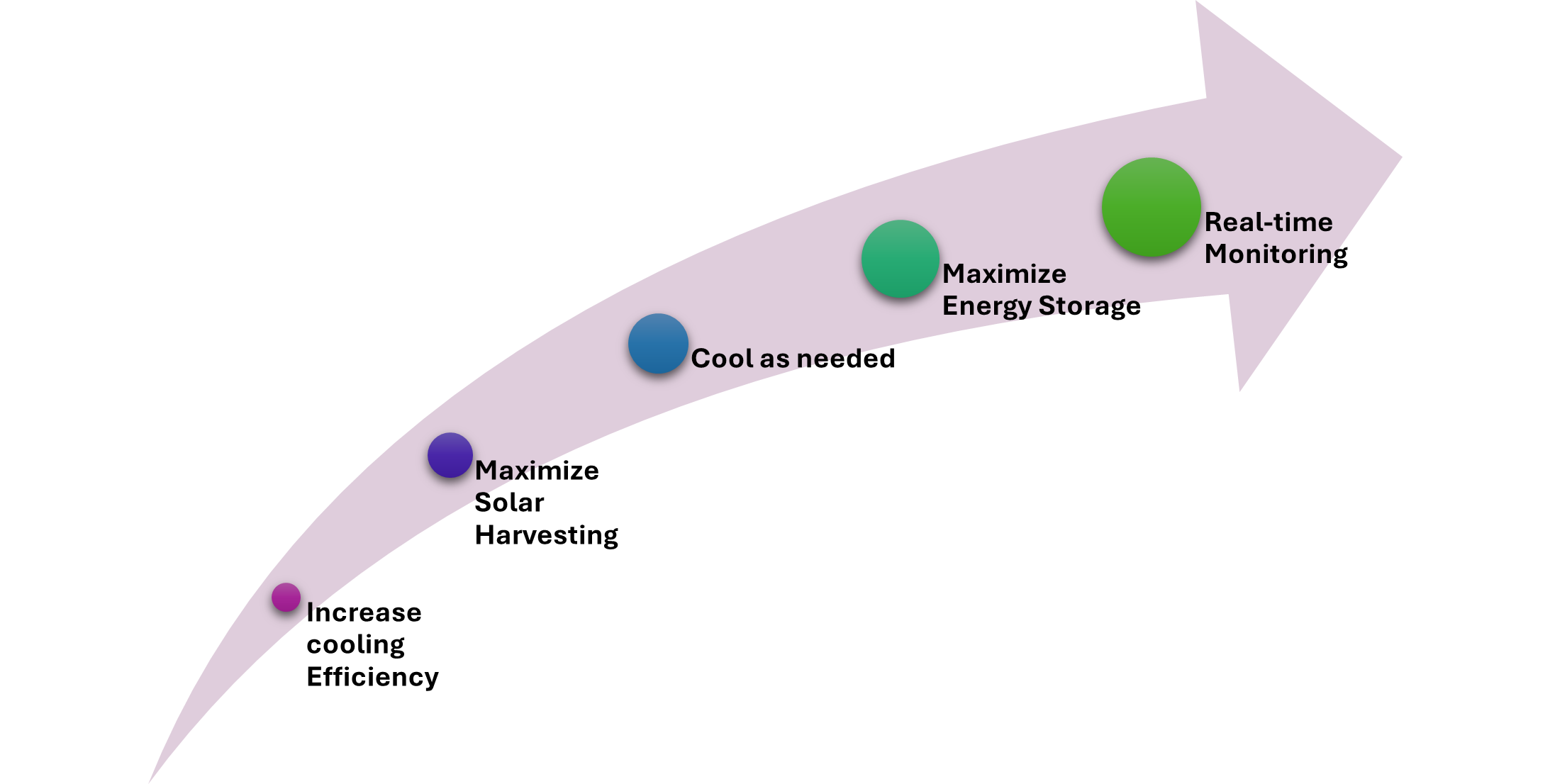
The path forward lies in carbon-neutral cold chain systems that combine:
- Radical Energy Efficiency: Through advanced insulation, AI-driven smart cooling, and optimized heat exchange to drastically reduce the total energy demand.
- On-Board Renewable Energy: Integrating solar harvesting to directly power cooling loads and offset grid charging.
- Intelligent Energy Management: Using thermal and electrical batteries, controlled by AI, to shift loads, buffer energy, and ensure stability without compromising temperature integrity.
- Data-Driven Transparency: Implementing secure IoT platforms to provide audit-proof cold chain integrity, meeting strict pharmaceutical (GDP) and food safety (HACCP) standards.
Technology and Digitalization
New Frontiers in Cooling and Storage
Thermal Energy Storage (TES) solutions, and advanced hybrid systems are now being validated on a scale. Modular, flexible storage allows for rapid cooling, solar integration, and grid independence, helping address both sustainability and cost challenges.
Smart Digital Platforms and Predictive Logistics
The adoption of industrial IoT, AI-driven control, and digital twins is transforming operations—from real-time temperature and humidity monitoring, route optimization, and remote diagnostics to compliance proof and traceable data for regulators and clients. Smart integration also eliminates unnecessary cooling cycles. Predictive analytics enable proactive maintenance, reducing costly downtime and product spoilage.
Energy and Integration
Solar harvesting on trailers, warehouses, and distribution centers is increasingly viable, particularly as lightweight, flexible photovoltaic materials come online. Systems integration is key—seamless links between solar, battery, and cold storage can dramatically reduce grid dependency and operating emissions.
Workforce and Skills
The transformation of the cold chain is also a human story. Operators face acute shortages of skilled drivers and refrigeration technicians, while digitalization means new roles - and new skills - are required. Investments in workforce training, upskilling, and collaboration with technology providers are essential for realizing the sector's potential.
Future Outlook and Strategic Implications
By 2030, the cold chain landscape will look radically different. Expect:
- Hybrid energy hubs and microgrids at major logistics nodes, reducing single-point grid failure risk.
- AI-enabled adaptive logistics that account for weather, market demand, and infrastructure shocks.
- Embedded ESG and digital compliance as default requirements for contracts with global shippers and retailers.
- Convergence of food, pharma, and retail cold chains through shared platforms and technologies.
- Broad uptake of financing models—leasing, public-private partnerships, and carbon markets—to overcome CAPEX barriers and accelerate climate-aligned investment.
Conclusion
Cold chain operators, policymakers, and technology providers face a historic opportunity—and duty—to innovate and collaborate. The sector’s transition will shape food security, public health, and planetary sustainability for decades to come. Those who embrace digitalization, clean energy, advanced thermal management, and human capital development will set the pace for a smarter, greener, and more resilient cold chain future.
References
Cooling Coalition (UN Environment Programme, IFC). 2024. "Mobilizing Investment for the Developing World's Sustainable Cooling Needs". Cooler Finance. ISBN: 979-8-9915515-0-2 © UNEP and IFC, 2024
IIR. 2021. "THE CARBON FOOTPRINT OF THE COLD CHAIN". 7th Informatory Note on Refrigeration and Food. International Institute Of Refrigeration. DOI: 10.18462/iir.INfood07.04.2021
Sharma, R. (n.d.) . "Transport Refrigeration Electrification Market Research Report 2033". Market Intelo. Editor: Bhat, S. https://marketintelo.com/report/transport-refrigeration-electrification-market
